
What are the second 10 days of Ramadan?
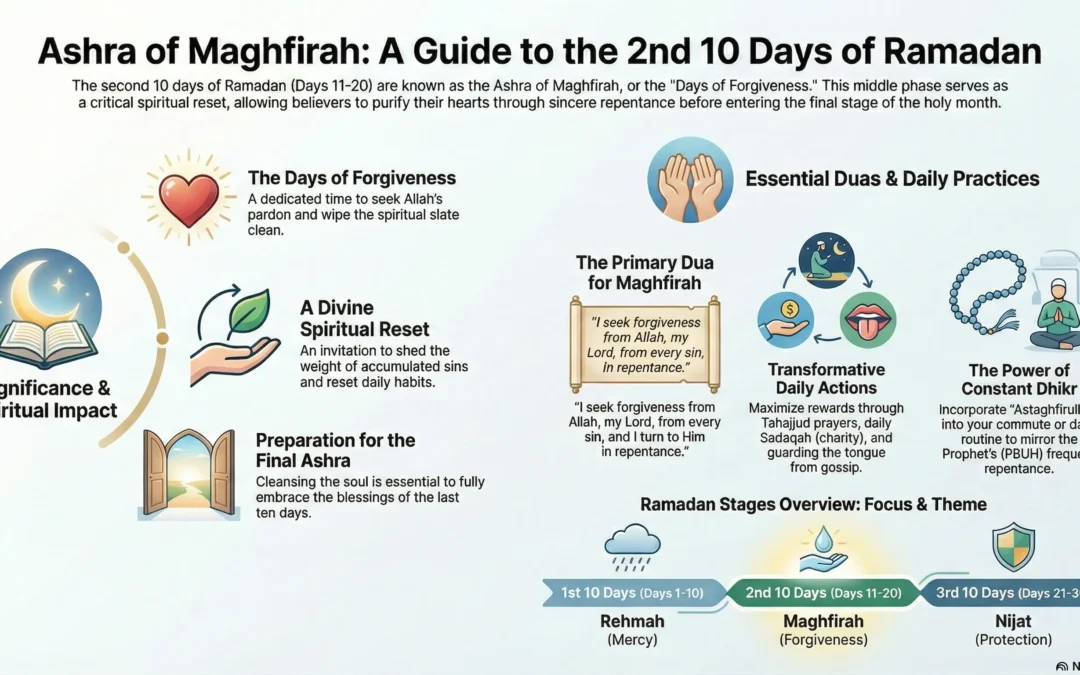
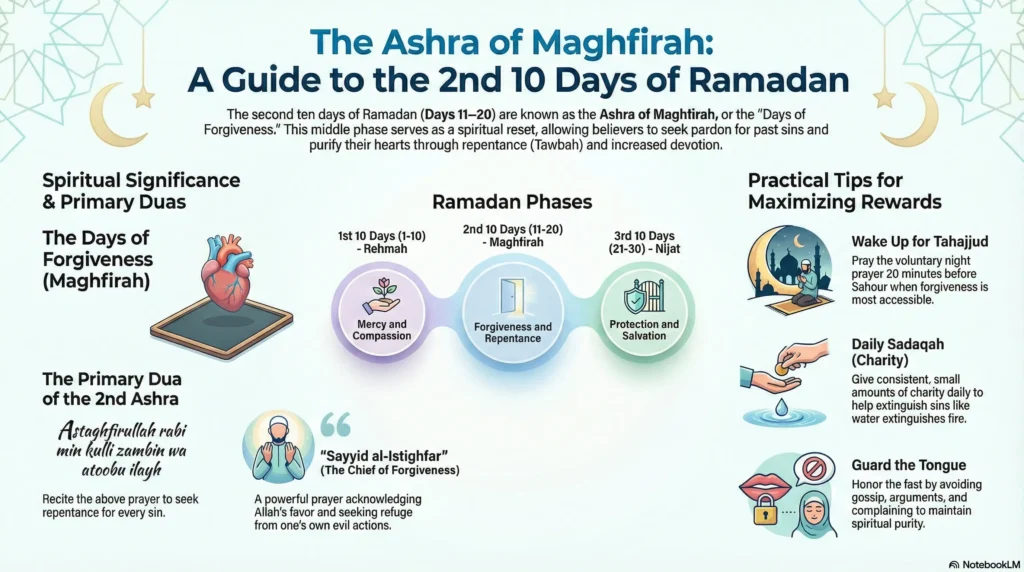
The second 10 days of Ramadan (Days 11-20) are known as the Ashra of Maghfirah, which translates to the “Days of Forgiveness.” During this critical middle phase of the holy month, Muslims focus intensely on seeking Allah’s pardon for past sins and purifying their hearts through sincere repentance (Tawbah).
Key Practices for the 2nd Ashra:
- Primary Dua: Constantly recite “Astaghfirullah rabi min kulli zambin wa atoobu ilayh.”
- Continuous Dhikr: Engage in the daily remembrance and glorification of Allah.
- Tahajjud Prayers: Wake up before Sahour to offer voluntary night prayers.
- Daily Sadaqah: Give consistent charity to help expiate wrongdoings.
As the moon progresses and the initial days of fasting settle into a beautiful rhythm, we transition from the first phase of Ramadan into a profound period of spiritual cleansing.
If you are wondering what the second 10 days of Ramadan are called, what their deep significance is, and which duas (supplications) you should recite to maximize your blessings, you are in the right place.
In this guide, we will explore the profound meaning of the middle ten days of Ramadan, share the best duas in Arabic and English, and offer practical tips to elevate your daily worship.
What Are the Names of the 1st, 2nd, and 3rd 10 Days of Ramadan?
Ramadan is traditionally divided into three distinct stages, known as Ashras (an Arabic word meaning “ten”). Each Ashra carries a specific spiritual theme and focus, guiding believers through a journey of mercy, forgiveness, and ultimate salvation.
- The 1st 10 Days (Days 1-10): Rehmah (Mercy). This is a time to seek Allah’s boundless mercy and shower compassion upon others.
- The 2nd 10 Days (Days 11-20): Maghfirah (Forgiveness). This middle phase is dedicated to seeking pardon for our shortcomings and wiping our spiritual slates clean.
- The 3rd 10 Days (Days 21-30): Nijat (Protection). The final ten days, which include the Night of Power (Laylat al-Qadr), focus on seeking refuge from the Hellfire and securing our place in Jannah (Paradise).
A Quick Tip for Seamless Fasting: Transitioning between Ashras means changing prayer and fasting times. Use the Muslim Calendar app to get precise, location-based Iftar and Sahour reminders so you never miss a moment of blessing.
What is Significant About the Second 10 Days of Ramadan?
The second 10 days of Ramadan are the “Days of Forgiveness” (Maghfirah).
So, what makes this period so significant? As humans, we are prone to mistakes. The daily grind often distracts us, and sins—both minor and major—can accumulate, weighing heavily on our hearts. The middle ten days are a divine invitation to shed that weight.
The significance of the middle ten days lies in:
- Spiritual Reset: It is a dedicated time to sincerely repent (Tawbah). Allah’s capacity to forgive far outweighs our capacity to sin.
- Increased Consciousness (Taqwa): By actively seeking forgiveness, we become hyper-aware of our daily actions, leading to better habits.
- Preparation for the Final Ashra: You cannot fully embrace the immense blessings of the last ten days (and Laylat al-Qadr) with a burdened heart. The second Ashra cleanses you so you can sprint toward the finish line of Ramadan with a pure soul.
The Best Duas for the 2nd 10 Days of Ramadan
People often ask, “What to say in the second 10 days of Ramadan?” The central theme of your prayers should revolve around Istighfar (seeking forgiveness).
The Primary Dua for the Second Ashra Of Ramadan
While you can ask for forgiveness in your own words, there is a widely recited dua specifically cherished during the second 10 days of Ramadan:
Arabic:
أَسْتَغْفِرُ اللَّهَ رَبِّي مِنْ كُلِّ ذَنْبٍ وَأَتُوبُ إِلَيْهِ
Transliteration:
Astaghfirullah rabi min kulli zambin wa atoobu ilayh.
English Translation:
“I seek forgiveness from Allah, my Lord, from every sin, and I turn to Him in repentance.”
Sayyid al-Istighfar (The Chief of Forgiveness)
According to Hadith (Sahih al-Bukhari), the Prophet Muhammad (peace be upon him) highlighted the “Chief of Prayers for Forgiveness.” Reciting this with firm faith during the day or night carries immense reward.
Arabic:
اللَّهُمَّ أَنْتَ رَبِّي لا إِلَهَ إِلا أَنْتَ ، عَلَيْقَ تَوَكَّلْتُ ، وَأَنْتَ رَبُّ الْعَرْشِ الْعَظِيمِ ، مَا شَاءَ اللَّهُ كَانَ ، وَمَا لَمْ يَشَأْ لَمْ يَكُنْ ، أَشْهَدُ أَنَّ اللَّهَ عَلَى كُلِّ شَيْءٍ قَدِيرٌ ، وَأَنَّ اللَّهَ قَدْ أَحَاطَ بِكُلِّ شَيْءٍ عِلْمًا
English Translation:
“O Allah, You are my Lord; there is no deity except You. You created me and I am Your servant, and I will abide by Your covenant and promise as best I can. I take refuge in You from the evil of which I have committed. I acknowledge Your favor upon me and I acknowledge my sin, so forgive me, for verily none can forgive sins except You.”
Daily Spiritual Nourishment: Remembering all these duas can be tough during a busy workday. The Muslim Calendar app provides daily reminders from the Quran and Hadith directly to your phone, ensuring your heart stays connected to Allah’s words all month long.
What to Recite: Dhikr for the 2nd 10 Days of Ramadan
Beyond formal duas, integrating continuous Dhikr (remembrance of Allah) into your daily routine is highly recommended. If you are wondering what to read or recite as you commute, cook, or wait in line, focus on these powerful phrases:
- Astaghfirullah (I seek forgiveness from Allah): Repeat this constantly. The Prophet (PBUH) sought forgiveness more than 70 times a day!
- SubhanAllahi wa bihamdihi, SubhanAllahil Adheem (Glory be to Allah and His is the praise, Glory be to Allah the Great): A beautiful, light phrase that is heavy on the scales of good deeds.
- La ilaha illa anta subhanaka inni kuntu minadz dzaalimeen (The Dua of Prophet Yunus): “There is no deity except You; exalted are You. Indeed, I have been of the wrongdoers.”
Practical Tips for the Days of Maghfirah
To truly honor the second 10 days of Ramadan, it requires more than just reciting Arabic words; it requires practical action. Here is how you can maximize this period:
1. Wake Up for Tahajjud
The last third of the night is when Allah’s mercy and forgiveness are most accessible. Waking up just 20 minutes before Sahour to pray Tahajjud (the night prayer) is a transformative experience.
- Make it easy: Set up dedicated Tahajjud alerts using the Muslim Calendar app so you never oversleep during these crucial hours.
2. Guard Your Tongue
Forgiveness isn’t just about what you ask from God; it’s about how you treat His creation. Avoid gossip, arguments, and complaining. True fasting involves the stomach, the eyes, and the tongue.
3. Increase Your Nafl (Voluntary) Prayers
Beyond the 5 obligatory daily Salah, add extra Nafl prayers (like Duha in the morning or Awwabin in the evening).
- Stay consistent: Use the Nafl reminders in the Muslim Calendar app to build this beautiful habit seamlessly into your day.
4. Give Charity (Sadaqah) for Forgiveness
Charity extinguishes sins just as water extinguishes fire. You don’t have to give thousands; even a small, consistent daily amount given with a pure heart can wipe away wrongdoings. Let the Muslim Calendar app’s charity reminders prompt you to give a little something every day during this Ashra.
A Final Thought on the Second Ashra
The second 10 days of Ramadan are a beautiful, quiet reset button. It is a warm embrace from the Creator, reminding us that no matter how far we have strayed, the door to His forgiveness is wide open.
Take a deep breath, recite your Istighfar, and let go of the spiritual baggage you’ve been carrying.
Ready to Make the Most of Your Ramadan?
Fasting, tracking your prayers, and remembering your daily Duas shouldn’t feel overwhelming. With the Muslim Calendar app, you have a pocket companion that handles the logistics so you can focus on your spiritual growth.
From precise Iftar and Sahour reminders to Tahajjud alerts, charity prompts, and daily wisdom from the Quran and Hadith, Muslim Calendar is built to elevate your faith.
May your fasts be accepted, and may your sins be forgiven during this beautiful second Ashra.



Frequently Asked Questions (FAQs) About the 2nd 10 Days of Ramadan
What are the second 10 days of Ramadan called?
The second 10 days of Ramadan are called the Ashra of Maghfirah, which translates from Arabic to the “Days of Forgiveness.” During this middle phase of the month, Muslims focus intensely on seeking Allah’s pardon and repenting for past mistakes.
What is the main significance of the middle ten days of Ramadan?
The significance of the middle ten days lies in spiritual purification. Because humans are prone to sin, this period acts as a divine reset button. It is a dedicated time to seek Allah’s boundless forgiveness so that your heart is clean and prepared for the immense blessings of the final ten days.
What is the best dua for the 2nd 10 days of Ramadan?
The most widely recited dua for the second Ashra is: “Astaghfirullah rabi min kulli zambin wa atoobu ilayh.” In English, this translates to: “I seek forgiveness from Allah, my Lord, from every sin, and I turn to Him in repentance.”
What should I read or recite in the second 10 days of Ramadan?
You should frequently recite Istighfar (saying “Astaghfirullah”) throughout the day. It is also highly recommended to recite the Sayyid al-Istighfar (the Chief of Forgiveness dua) and read verses from the Quran that highlight Allah’s infinite mercy and pardon.
How can I maximize my worship in the 2nd 10 days of Ramadan?
You can maximize this period by waking up early for Tahajjud prayers before Sahour, adding voluntary (Nafl) prayers to your daily routine, and giving consistent, daily charity (Sadaqah). Setting reminders for these acts—like the ones available in the Muslim Calendar app—helps keep your focus strong.
Read From Our Other Blogs
Knowledge Base:
- Yaqeen : https://yaqeeninstitute.org/
- Muslim World League – https://themwl.org/